
TEDU CITY Member Ceren Gamze Yaşar at the RC21 Conference!
Tarih: Date
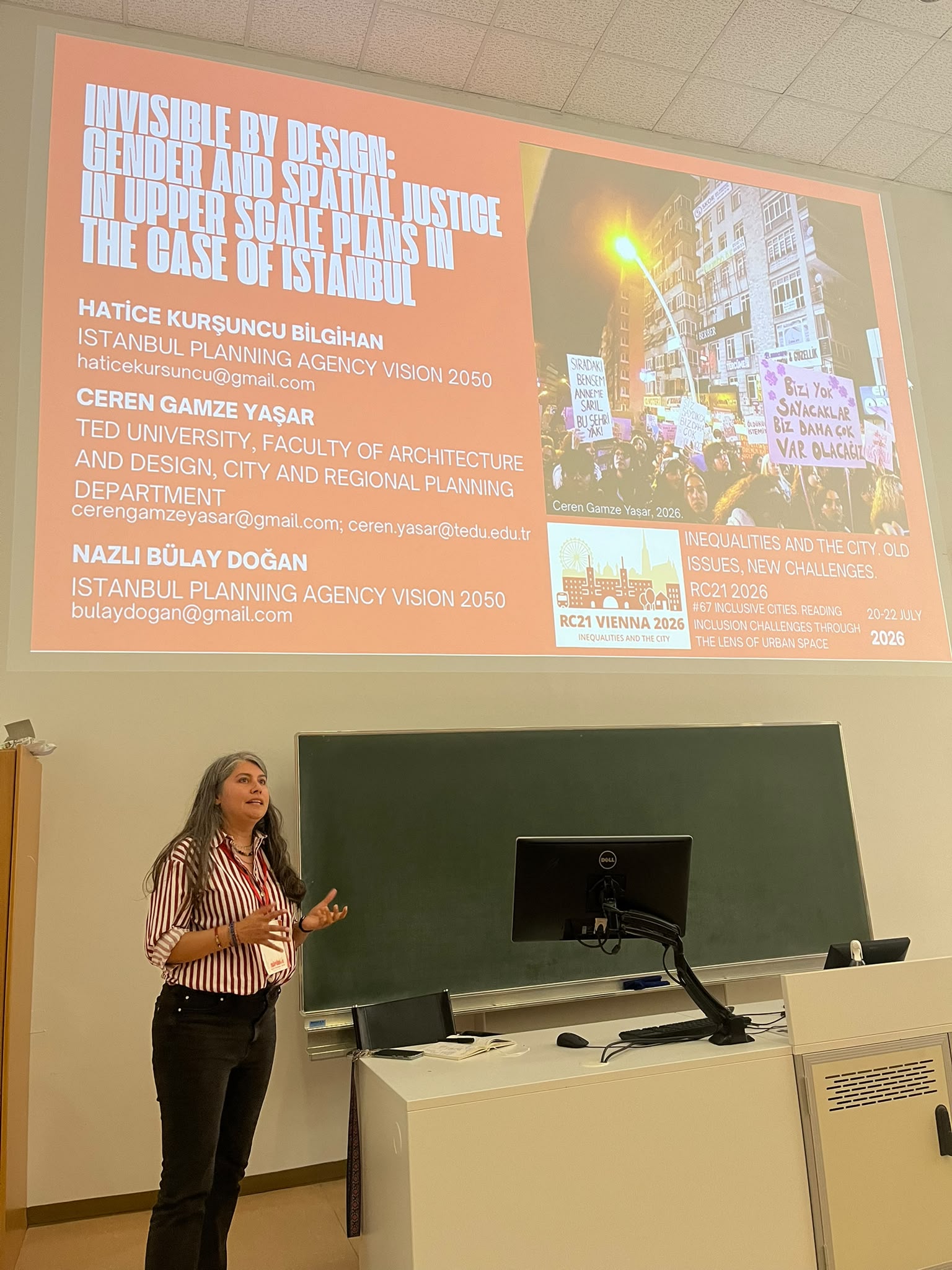
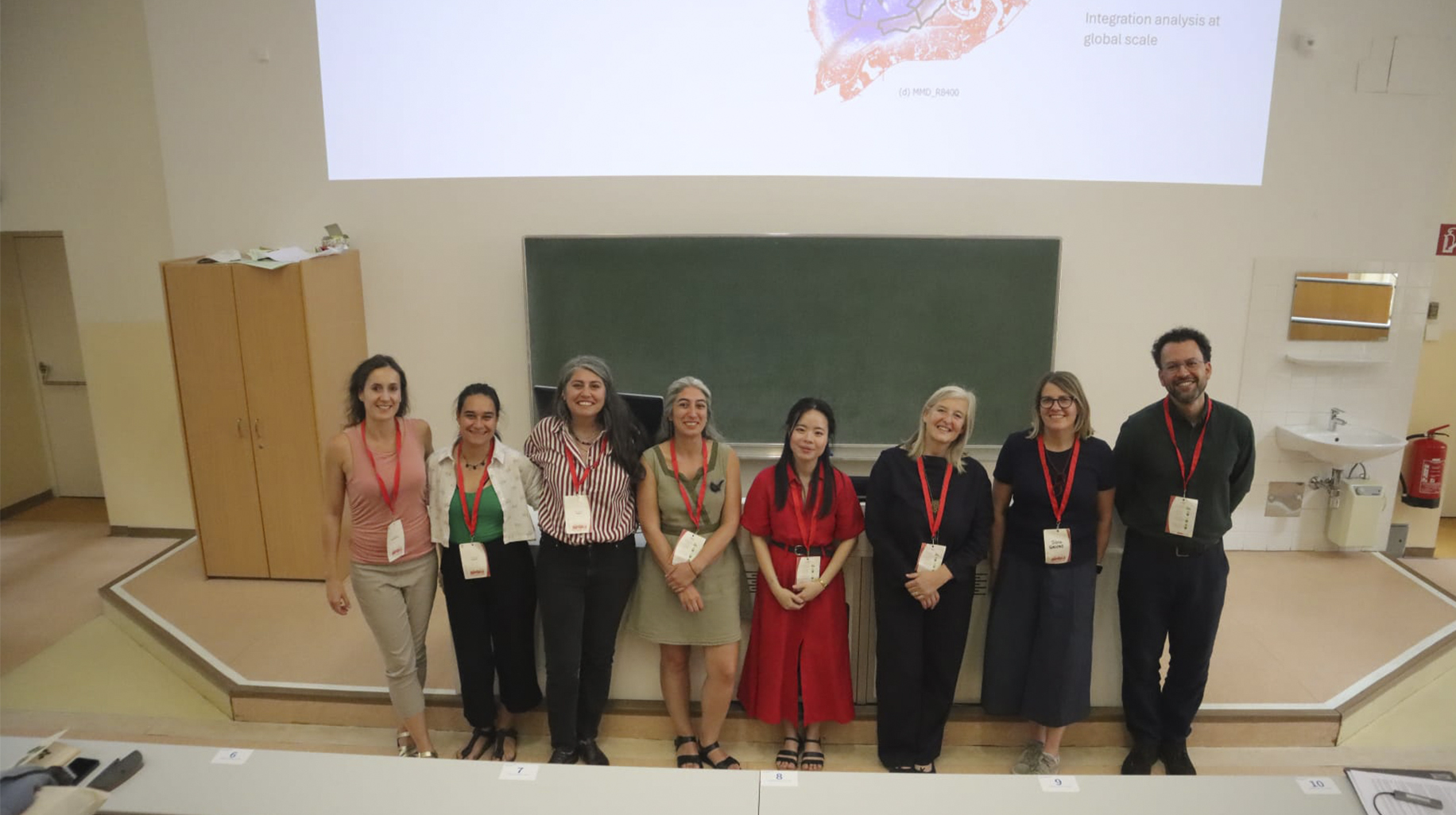
TED University Department of City and Regional Planning faculty member Asst. Prof. Dr. Ceren Gamze Yaşar, together with Hatice Kurşuncu Bilgihan and Nazlı Bülay Doğan from the Istanbul Planning Agency Vision 2050 team, presented their research at RC21 2026 – “Inequalities and the City: Old Issues, New Challenges,” held on 20–22 July 2026.
Their study, titled “Invisible by Design: Gender and Spatial Justice in Upper Scale Plans in the Case of Istanbul,” was presented within the session “Inclusive Cities: Reading Inclusion Challenges through the Lens of Urban Space.”
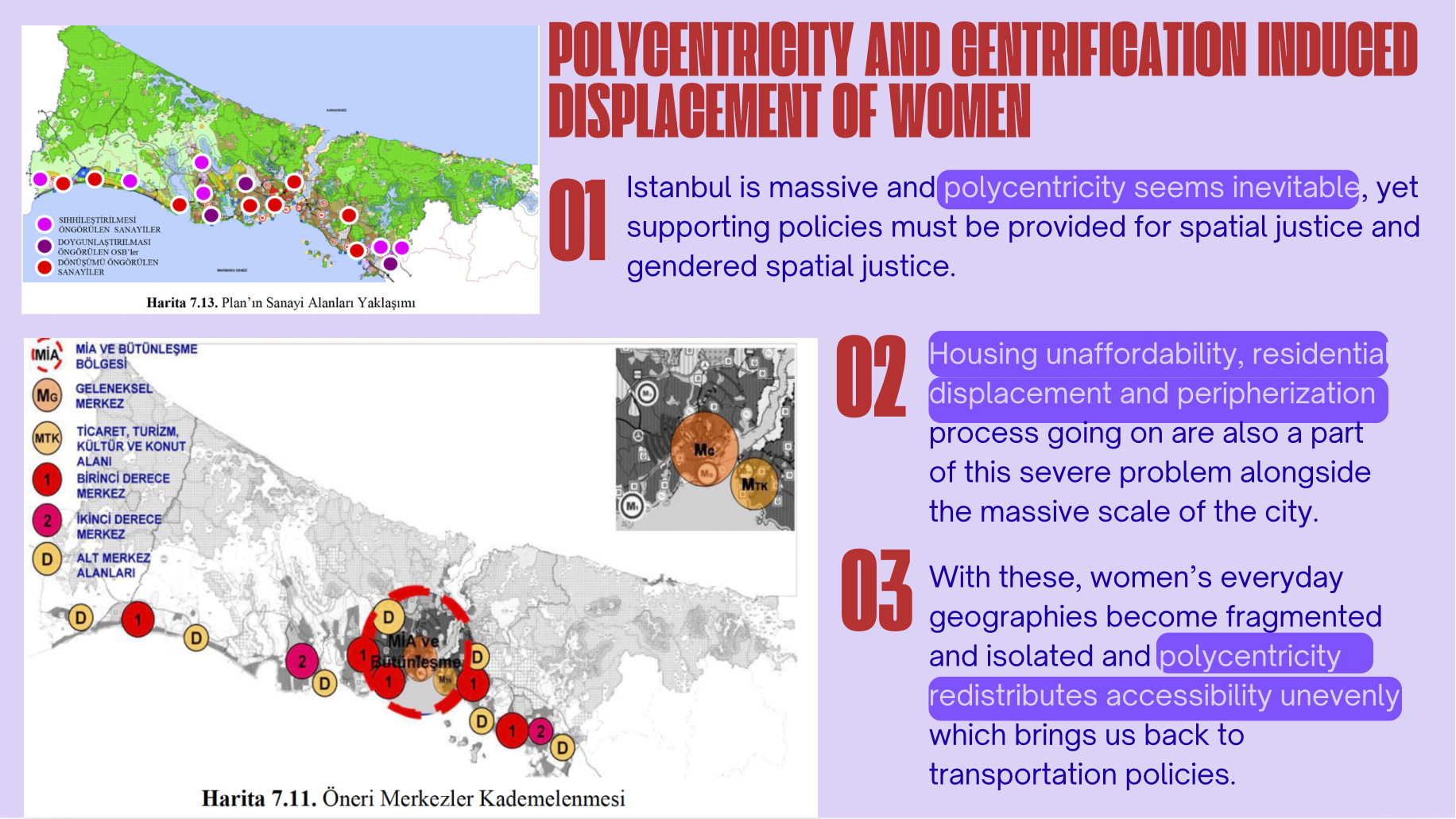
The study develops a feminist reading of upper-scale planning, examining how seemingly gender-neutral master plan decisions can produce differentiated and gendered spatial outcomes through the organization of housing, employment, mobility, and care. Focusing on Istanbul’s 2009 1/100,000-scale Environmental Plan, the research critically evaluates major planning strategies including polycentric development, industrial restructuring, service-sector growth, and transportation investments.
Through the concepts of polycentricity, deindustrialization, spatial entrapment, time poverty, and gendered spatial justice, the study demonstrates how the spatial separation of housing, employment, services, and care activities can disproportionately affect women’s everyday lives. In particular, longer and fragmented journeys, care-related trip chaining, peripheralization, and changing geographies of employment and urban services can constrain women’s access to paid work, education, leisure, and civic participation.
The study at the nexus of planning theory and practice, praxis in sum, ultimately argues that planning is not only about organizing cities, but also about organizing everyday life. It emphasizes that gender-inclusive planning therefore needs to extend beyond representation and street-level urban design to address the multiscalar and upper-scale planning decisions through which inequalities become embedded in metropolitan space.